
Tanzania art and music have influences from many cultures. Tanzania has a history that has been able to stay alive through art and music. Today there are many styles of music that has its roots in traditional African sounds and dance. The art of Tanzania includes sculptures, paintings, and wood carvings that preserve the culture of the people and beliefs to be passed down from generation to generation.
The Taarab is a genre of music in Tanzania. It has its roots in Islamic culture and is a blend of African, European, Arab Middle East, and East African instruments. Taarab is basically sung poetry. It is mostly used in wedding ceremonies today. Over the years hip hop and jazz have influenced the cities of Tanzania which is why Taarab is usually found in coastal areas today. During the 1960s Tanzania became influenced in their music by Latin and Cuban music. Tanzanian soldiers were in those countries and upon arriving home they brought some of this influence. This made way for Tanzania to create their own style of music. They called it 'Swahili Jazz". The 1960s is also when Tanzania became independent so creating this style of music gave the people an opportunity to be themselves. I believe music has had a huge impact on this country to become themselves and be creative.

(Tingatinga painting)
Paintings, sculptures, and wood carvings can be found in Tanzania as a way to depict their thoughts, ideas, and surroundings. Zanzibar is most famous for its carved doors and Arab chests. A famous painter, Edward Saidi Tingatinga was native to South Tanzania. His style of painting has flourished in the country, becoming the most widely known type of painting. When Edward passed away the country named his style of painting after him; "Tingatinga". This style can be found in most places of Tanzania and there are many artists who
paint this style. These types of paintings are typically bright in color, illustrating superstitious beliefs or particular animal or scenery. Within the newspaper you can find cartoons and comics that can be traced back to pioneering artists. Tanzania is also known for its wood carvings. Wood carvings are mostly known by the name "Makonde art". Typically, wood carvings show nature like animals or people working however recently these wood carvings show off devils in different forms and family trees relating to the tradition of togetherness. This recent style of wood carving is known as "Shetani". These wood carvings in general are done by hand with iron tools on ebony wood.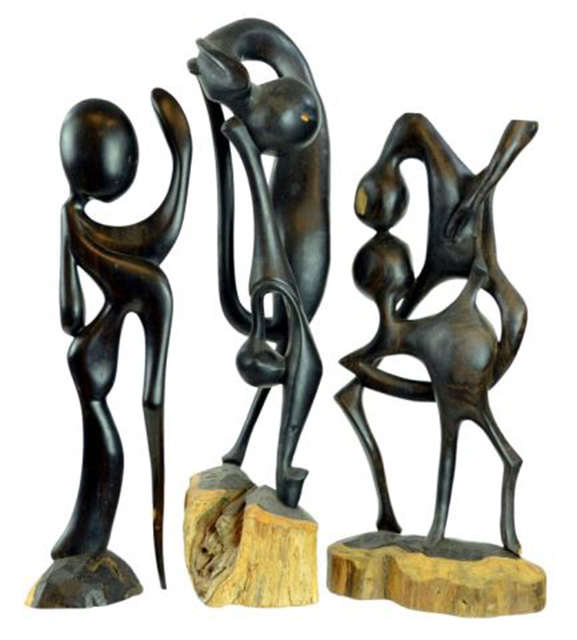
In general, music and art has helped preserve Tanzanian history. They also show case beliefs the people have and can give a glimpse into the life of the people. Tribal dances can tell a story sometimes better than words can and traditional art or paintings can lock images for years to come of the struggles, joys, and fears the people deal with. Even though music and art in Tanzania is influenced by other cultures it seems there is still a fight to preserve its history and make head way to creating their own identity for the future.
Resources:
www.Britannica.com
www.press.uchicago.edu

I really enjoyed reading your blog, the layout and design is very creative and engaging. I enjoyed how you described the role which art and music helped preserve Tanzanian history. Culture of a civilization truly gives a glimpse of the daily lives of the people, their beliefs, traditions, etc. The tribal dances tell stories of the people as well as paintings, their hardships, joys, fears, and successes. These non-written resources preserve the history of Tanzania and the path of its future culture. It is amazing how culture is passed down from generation to generation. Excellent post, I truly enjoyed reading more about the nation of Tanzania.
ReplyDeleteJust purchased a carved modern statue by Mathias Nampoka.
ReplyDelete