Wednesday, April 29, 2015
People, Politics, and money
Tanzania is a country that offers many great things and has always had its problems. The people of Tanzania have always fought hard for themselves and still today continue to struggle for bear necessities. Tanzania is a bit different from other countries in Africa because it has not had a lot of internal issues. For the most part Tanzania's struggles comes from outsiders and not a lot of strife between itself. Tanzania is not without its corruption and poor leadership.
Today Tanzania is one of the poorest country in the world. One thing for sure, Tanzanians have amazing pride in their country. Over the past few decades they have wanted independence, attempted to figure out how to bring in revenue, and wanting to be self- reliant in any way. Tanzanians tend to find themselves up against a wall when it comes to farming and exports because Tanzania does not have many items to export or great land to farm. One attempt in reconciling this issue was made in 1964 when Mainland Tanganyika and Zanzibar merged. Tanzania still had such little exports and land to cultivate, Tanzania was not able to secure or establish its economy.
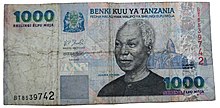
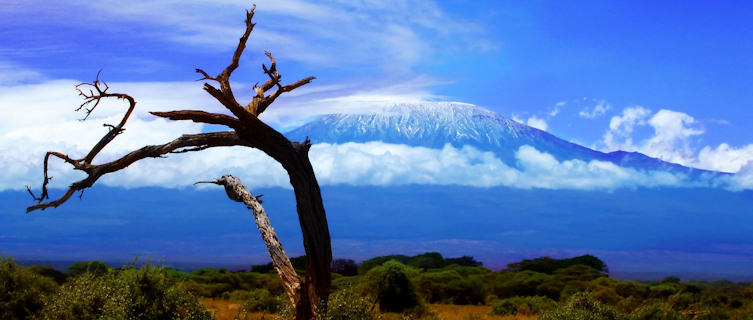
The first President of Tanzania, Julius Nyerere wanted to bring in revenue to his country so in 1967 he issued the Arusha Declaration. This declaration attempted to gain self-reliance by way of farming, creating factories, plantations, banks, and private companies. This declaration carried on for the next decade or so but in the end failed due to corruption, inefficiency, and surprisingly the rise of petroleum. Julius continued to make poor decisions through his presidency even in sending military aid to help overthrow President Idi Amin of Uganda in 1979 through 1981. This decision only caused further issues in the economy. Under the next president, Benjamin Mkapa continued to strive for economic stability and in fact succeeded a bit during his term. Tourism became a huge part in bringing in revenue to the country such as Mount Kilimanjaro and wildlife preserves like the Serengeti.
While Tanzania becomes stronger in its economy another beast arrises in its midst. Tanzania has a large Albino population that is being attacked and killed for sorcery and witchcraft. For some reason, Tanzania has a large population of Albino people and in recent years lots of been killed for their limbs or outcasted
within the community. Most of the killings happen because a middle man wants to get rich quick and the witches offer fast money for their limbs. Many albinos flee to the city of Dar es Salaam for protection though there is always a threat of being killed. Today, there are many things that could be better with Tanzania and with credible guidance great progress can be made in the country.
Sources:
"Tanzania country profile-overview"; www.bbc.com/news/world-africa, April 2015; April 29,2015
"Living in fear: Tanzania's Albinos"; www.bbc.com/news/world-africa; July 21,2008; April 29,2015
Picture source:
http://www.viralnova.com/tanzanian-albinos/; January 28,2015; April 29,2015
"Tanzania Travel Guide"; http://www.worldtravelguide.net/tanzania; April 28,2015; April 29,2015
Thursday, April 23, 2015
The missionary presence.
Tanzania has had numerous missionary influences over the years. If anything Tanzania has so many options when it comes to religion and what to believe. Not only do they have the ideas and things the ancestors or tribal people believe but they also have tons of people coming from other countries preaching, building, and teaching. I cannot help but think how over loaded some may have been as they sought out what is truth for their own lives. I would imagine it is difficult to choose just one however many Tanzanians have chosen to practice one or two religions.
Tanzania saw a presence of missionaries as early as the 1830s. In the surrounding countries there was a lot of strife and world powers attempting to gain further control. After the Napoleonic wars Tanzania saw missionaries coming by way of caravan routes. One thing that is interesting to note is that some of the first missionaries did not have a specific agenda to convert people or spread the good news. Some first concerns were to send word to Europeans about Arab slave trade and even assisted in ending it. Islam and the Muslim religion had a significant presence in Tanzania; primarily Zanzibar. With this religion already established in Tanzania, the missionaries that came were up against this mindset.
During the 16th century Portugal sent missionaries to Tanzania. They attempted to establish churches however in the 17th century they stopped their efforts. Bagaymoyo is where the presence of these missionaries were and some of the first converts came from here. Bagaymoyo not only became home to churches but also stood as refugee center for slaves. Again the purpose of the missionaries shifted from establishing churches to assisting the people in a real tangible way by providing basic necessities for the people. Soon the Roman Catholic church began to have presence along the coast. At around the same time the Anglican church is sending people and also German missionaries are coming. The German missionaries arrived during the 19th century in Dar es Salaam. During the wars; WWI and WWII; missionaries were in an out of Tanzania. The Lutheran church also became involved and sent help to Tanzania. Scandinavians, Swedish, and Danish missionaries came to aid as well.
The presence of missionaries in Tanzania became more like aid workers. The slave trade was a big deal and some were beginning to be released. Many of them had no where to go so the churches that were established became homes for them. At first the missionaries were people who got information on the happenings and dealings with Europe then over time progressed to really attempting to meet tangible needs of the people. Many churches also established schools so not only informants and aid workers but also educators. Even today, the church is sort of an all encompassing entity.
Sources:
Fahlbusch, Erwin, Encyclopedia of Christianity, WM. B. Eerdmans Publishing Company, Grand Rapids/Cambridge.
Friday, April 17, 2015
First Contacts.
Beginnings are an important part of people and as we have seen, countries. The foundation on which things are founded or started can set up people or countries to be successful or fail miserably. Finding the gems of Tanzania was no easy feet for the explorers. Before being found, Tanzania was able to keep to itself, living off what the land provided. Tanzania went through a few different powers before it gained its independence back in 1961.
Tanzania was primarily controlled by Omani Arabs beginning in 1698. Under the Omani rule Tanzania actually came to life again. At least for a time trade was happening and new settlements were founded. As with most success when word gets around someone tends to get greedy! Zanzibar was the place most people wanted to settle and do business. In the last half of the 18th century, Tanzania had many revolts and uprisings do to people trying to take advantage each other. Sa'id Sultan gained leadership around 1806 and focused on controlling the rebellions so work could resume.
The first Portuguese sailor to make it to Tanzania was Vasco de Gama. In 1498 he was sailing the East coast of Africa in search of the Orient and found Tanzania instead. Word spread about things happening in Tanzania. Others knew Tanzania had ivory and slaves and fertile land. For Europe, they waited and watched for the right moment to make their claim in Tanzania. As people traveled and traded goods there was also disease spreading which in turn weaken any control people had. Europe saw this and waited. Carl Peters began making treaties as a way to explore the land. This gave way for British settlers and European settlers to come and make claim to territory.
Around this time Europe was in the midst of an Industrial revolution. Europe had much to gain from expanding to new territories. Zanzibar had rich, fertile land for cultivating and offered a good starting point to getting their hands on some new land. Once in Tanzania Europeans could force farmers to grow crops, exchange cattle, or people for ivory or land deals.
Most of the decisions Europe made in regards to Tanzania was selfish and motivated by furthering their own agenda. The people of Tanzania likely thought they would somehow benefit from some of these business deals but in the end they did not. For Tanzania's their quality of life was greatly diminished. They were forced to work really hard and produce items for trade for money they never saw. People were traded overseas and would most likely never see their families again. This disregard for the effects of Tanzania's caused a lot more rebellions and instability within itself. People began stealing from each other, villages were burned down, farming crops were ruined, and many people lost their lives.
Sources:
--Tanzania:Omani Conquest (1698-1884); Electoral Institute for Sustainable Democracy in Africa; www.content.eisa.org.2a/old-page/tanzania-omani-conquest; updated September 2005, 2015,April, 15
-- Tanzania: History; Lonely Planet; www.lonelyplanet.com/tanzania/history; updated 2015; 2015,April, 15
Wednesday, April 8, 2015
The Trading Game
| (http://en.wikipedia.org/wiki/Julius_Nyerere) |
Tanzania has its history with trading and in some cases being exploited. Once word got around about the valuable items Tanzania had, many people and countries wanted to have their hands in the pot so to speak. Tanzania has many goods it imports as well as many goods it exports. Tanzania mostly conducts business with the surrounding countries and continents.
Trading in Tanzania can be traced back to A.D. 900 when South West Asia and India settled on the coast. People from these places brought cloth, beads, and metal goods in efforts to trade for ivory. Ivory was a major item to be traded around this time. It was also found that a small number of Africans were traded as slaves. Slave trading was not high on the list for trade however it was happening on the coast. This small time trade exchange is what made way for a larger scale of business to be built. The Portuguese began to explore parts of Tanzania, mostly the coast. As more and more Portuguese came into Tanzania they began taking control of the country. By 1506 the Portuguese controlled most of the coast of East Africa. The locals however were not fond of them; they were not willing to live and conduct business together resulting in trade disruption, declines in towns, and people actually leaving the area.
Years later the Arabs make the mark on Tanzania. The Arabs of Oman helped expel the Portuguese from East Africa. Zanzibar became the Arabs focus for conducting trade business and when the Bu Said dynasty replaced the Yarubi rulers Zanzibar became the location of Oman's capital. This group of Arabs helped restore towns and even founded new ones. Along with reviving towns, caravan routes were beginning to
| http://upload.wikimedia.org/wikipedia/-Fang_traders_with_ivory.jpg |
Today Tanzania imports machinery, pesticides, industrial raw material, transportation equipment, petroleum, construction materials, and consumer goods. Tanzania exports minerals such as gold, gemstones, and diamonds, coffee, cotton, cashew nut, tea,sisal, tobacco, pyrethrum, and cloves. Under the rivers Malagarasi and Ruchugi lies brine springs from volcanic formations. This is where a lot of salt Tanzania exports comes from. These rivers are in west Tanzania near Uvinza. The salt is so pure it needs no filtering!
(http://www.tedgreiner.info/wp-content/uploads/2011/05/salt.jpg)
Resources:
www.tanzaniaembassy.or.jp/english/business/trade
www.infoplease.com/world/Tanzania-history.html
Reader,John, A Biography of the Continent of Africa page 271, 1998, New York
Thursday, April 2, 2015
Religion...
Tanzania is full of many different beliefs and customs. Tanzania is not exempt from the stories of the past that play different roles in the present. Tanzania has many opportunities for influence from other countries. Being that Tanzania is a coastal country there have been a few religions to influence the people on top of already having indigenous cultures. Africa in general has many different indigenous groups of people. Some of them have been preserved others have been faded out over the years. Never the less, Tanzania has its roots in these people groups with many choosing to place their beliefs in other powers.
Tanzania's religion can be divided into muslims, Christians, and indigenous people. Tanzania has many tribes with the Massai being a well known one. The muslims in Tanzania are thought to have been decendants of Aga Khan's spiritual leadership. This may have roots in Jainism, Hinduism, and Roman Catholicism. Zanzibar is the place that most of the muslims of Tanzania call home. It is estimated that about 99% of the muslims in Tanzania live in Zanzibar.
Christianity is also a religion of Tanzania. It is thought to have been introduced around the beginning of the 16th century via the establishment of Francisan mission. Then an actual Christian foundation was founded in 1934. Islam was first seen in the late medieval period during the establishment of Arab commercial stations in Zanzibar. Religious tension is the same today as it was years ago. There is no surprise that Tanzania has conflict with its people. Tanzania has a constitution that allows its people to have freedom with their religion however the hostility among the people does sway people to often choose the safer religion.
The Massai tribes much like the other tribes believe in a higher god but it is not always classified as the God of Christianity or the gods of muslims. The Massai are a people group who live off the land which is a way of life for many of the tribes of Tanzania. The Massai believe in one God called "Engai". They believe there are two sides of this God; kind and vengful. Within the tribe they have a patriarchal society; this includes a spiritual leader called "Laibon". This person does not necessarily have a high status in the tribe; they only carry prophetic or healing power among the people.
Among the Massai tribe there are others who live off the land, have myths or stories that have been passed down from generation to generation. They tend to be spiritual people, connecting with the land and taking from it what they need. Today, there are many conflicts with religion and attempting to take land from the tribe people. It is clear that religion plays significant parts in the lives of Tanzanians. It has caused fights and in worst cases death. Some Tanzanians have adopted modern ways of beliefs and others have fought hard to maintain the history of the people.
Subscribe to:
Posts (Atom)