 |
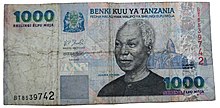
| (http://en.wikipedia.org/wiki/Julius_Nyerere) |
Tanzania has its history with trading and in some cases being exploited. Once word got around about the valuable items Tanzania had, many people and countries wanted to have their hands in the pot so to speak. Tanzania has many goods it imports as well as many goods it exports. Tanzania mostly conducts business with the surrounding countries and continents.
Trading in Tanzania can be traced back to A.D. 900 when South West Asia and India settled on the coast. People from these places brought cloth, beads, and metal goods in efforts to trade for ivory. Ivory was a major item to be traded around this time. It was also found that a small number of Africans were traded as slaves. Slave trading was not high on the list for trade however it was happening on the coast. This small time trade exchange is what made way for a larger scale of business to be built. The Portuguese began to explore parts of Tanzania, mostly the coast. As more and more Portuguese came into Tanzania they began taking control of the country. By 1506 the Portuguese controlled most of the coast of East Africa. The locals however were not fond of them; they were not willing to live and conduct business together resulting in trade disruption, declines in towns, and people actually leaving the area.
Years later the Arabs make the mark on Tanzania. The Arabs of Oman helped expel the Portuguese from East Africa. Zanzibar became the Arabs focus for conducting trade business and when the Bu Said dynasty replaced the Yarubi rulers Zanzibar became the location of Oman's capital. This group of Arabs helped restore towns and even founded new ones. Along with reviving towns, caravan routes were beginning to
 |
| http://upload.wikimedia.org/wikipedia/-Fang_traders_with_ivory.jpg |
establish. This allowed trade to go further into Tanzania and not just on its coast. The southern route carried mostly slaves and ivory. The northern route carried mostly ivory. Around 1886 Germans make their mark on Tanzania. They established the German East African Company. The ruler was ineffective though and revolts began to spring up. In the end, the Germans gained power and even began bringing new crops into the country.
Today Tanzania imports machinery, pesticides, industrial raw material, transportation equipment, petroleum, construction materials, and consumer goods. Tanzania exports minerals such as gold, gemstones, and diamonds, coffee, cotton, cashew nut, tea,sisal, tobacco, pyrethrum, and cloves. Under the rivers Malagarasi and Ruchugi lies brine springs from volcanic formations. This is where a lot of salt Tanzania exports comes from. These rivers are in west Tanzania near Uvinza. The salt is so pure it needs no filtering!
(http://www.tedgreiner.info/wp-content/uploads/2011/05/salt.jpg)
Resources:
www.tanzaniaembassy.or.jp/english/business/trade
www.infoplease.com/world/Tanzania-history.html
Reader,John, A Biography of the Continent of Africa page 271, 1998, New York